UK raises Machine Gaming Duty by five percentage points from April 2027
Chancellor John Healey confirms MGD to 25% amid business rates reforms and sector warnings
Key Takeaways
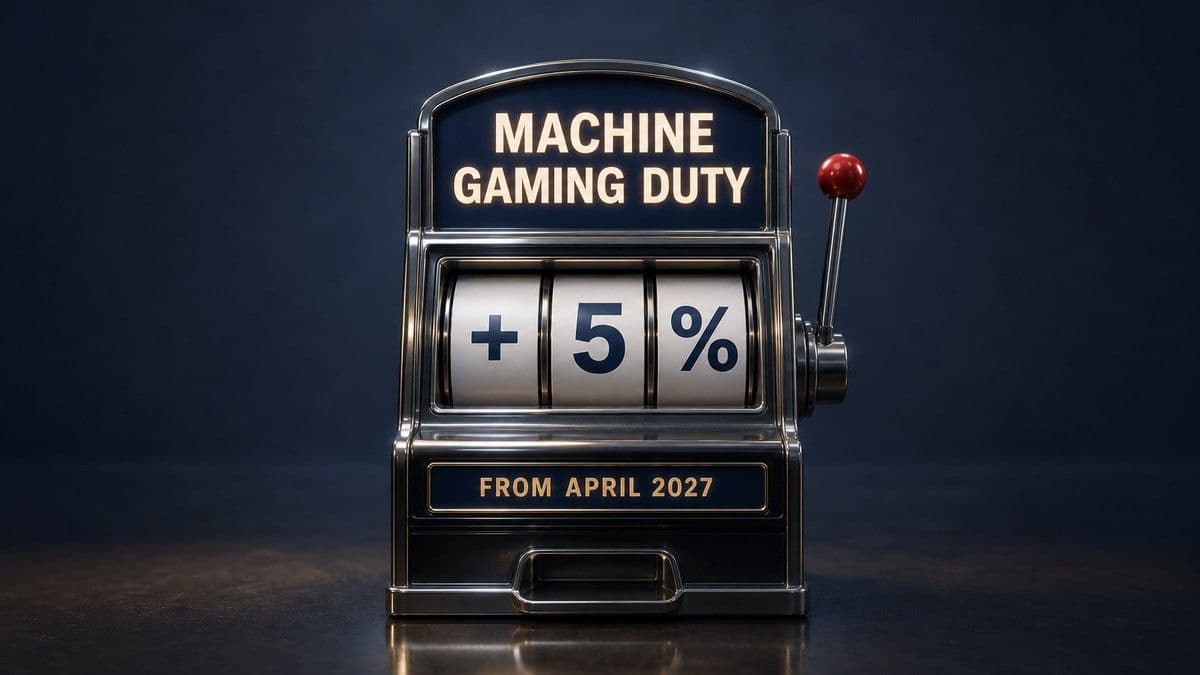
- Machine Gaming Duty on Class B machines will rise five percentage points to 25% from April 2027.
- EY modelling cited by the Betting and Gaming Council forecasts nearly 9,000 job losses and about 1,000 venues at risk.
- Entain estimates the change will cost its UK and Ireland retail business around £25m annually, while the BHA warns racing revenues could fall by up to £57m a year.
The UK will increase Machine Gaming Duty on Class B gaming machines by five percentage points to 25%, effective April 2027, Chancellor John Healey confirmed as part of the 2026 Autumn Budget. The increase is substantially smaller than a 40% rise widely discussed earlier in the year, but industry groups say the measure still risks job losses, venue closures and falls in regulated revenues.
What the Budget announced
Chancellor John Healey set the Machine Gaming Duty (MGD) rate for Class B machines at 25 per cent, up five percentage points from the previous rate. The change forms part of wider Autumn Budget measures that also include business rates reforms intended to increase the small business rate relief threshold from £12,000 to £18,000 and remove around 70,000 businesses from the system. The government presented the package as building on a 20 per cent reduction in business rates introduced when Prime Minister Andy Burnham entered office. The Budget also specified that adult gaming centres will no longer qualify for any business rates relief; they were singled out for elimination alongside vape shops.
The five-percentage-point MGD rise replaces earlier speculation that the tax could be doubled, a scenario driven in part by a report from the Social Market Foundation published earlier in 2026.
Industry reaction and financial estimates
The Betting and Gaming Council said the decision is "deeply damaging" and pointed to independent EY modelling that forecasts nearly 9,000 job losses and suggests around 1,000 betting shops and casinos could close or face significant financial pressure. BGC chief executive Grainne Hurst said venue closures would weaken local high streets and could drive customers toward illegal operators.
Entain provided a specific estimate for its UK and Ireland retail arm, stating the change would cost that business about £25m a year. Entain chief executive Stella David said the additional taxes would harm employment and high streets while increasing the appeal of illegal providers. Entain also said it expects to manage impacts through estate rationalisation and operational efficiencies.
The British Horseracing Authority warned of consequences for racing finance. BHA chief executive Brant Dunshea said horseracing receives nearly one-third of its annual funding, around £350m, from high-street betting contributions, and estimated the higher MGD could reduce racing revenues by as much as £57m a year. Dunshea linked such a reduction to potential effects on prize money, racecourse operations, employment and horse welfare programmes, and said the BHA intends to engage with government to "establish how we can work together to reduce the impacts of this tax policy."
Nicole Garrett, chief executive of the Bingo Association, warned the change could undermine investment across the sector and put hundreds of jobs at risk after the government had earlier scrapped Bingo Duty and pledged to support British bingo in April 2026.
Policy context and previous measures
The confirmed MGD increase comes after a series of fiscal and regulatory moves that have raised operators' tax burdens. In the 2025 Autumn Budget, then-Chancellor Rachel Reeves raised Remote Gaming Duty from 21 to 40%. A new General Betting Duty for remote betting is scheduled to take effect next year at 25%, up from 15%. The MGD decision was linked in the Budget to business rates adjustments intended to support retail, hospitality and leisure businesses by raising the small business relief threshold to £18,000.
The All-Party Parliamentary Group on Gambling Reform welcomed both the MGD increase and the removal of business rates relief for adult gaming centres. The group has campaigned for higher taxes on gambling products associated with greater social harm and had members advocating for a doubling of MGD; co-chair Alex Ballinger MP had called for a doubling as recently as the week before the Budget.
Debate over displacement and retail impacts
While operators expressed relief that the rise was lower than some predictions, many emphasised that the cumulative tax changes could encourage migration of customers to unregulated operators. The Betting and Gaming Council, Entain, the British Horseracing Authority and the Bingo Association all highlighted that additional taxation sits alongside recent regulatory changes, increasing pressure on retail estates and sector revenues.
“This decision is a blow to thousands of workers, businesses and communities who rely on Britain’s regulated betting and gaming industry,” said Grainne Hurst, chief executive of the Betting and Gaming Council.
Stella David, chief executive of Entain, warned: “These additional tax changes will further compound damage and push more people into the growing illegal market.”
Numbers at a glance
MGD rate for Class B machines will be 25% from April 2027 (a five-percentage-point increase).
EY modelling cited by the Betting and Gaming Council forecasts nearly 9,000 job losses and around 1,000 venues at risk.
Entain estimates a £25m annual cost to its UK and Ireland retail business.
The British Horseracing Authority estimates potential revenue loss to racing of up to £57m a year; horseracing receives roughly £350m a year from high-street betting contributions.
Small business rate relief threshold proposed to rise from £12,000 to £18,000, and around 70,000 businesses removed from the system.
What industry bodies say next
Industry groups said they will press for engagement with government on mitigating measures. The Betting and Gaming Council and the British Horseracing Authority have said they will seek talks to address the predicted commercial and community impacts. The government's business rates reforms were offered as a compensating measure in the Budget narrative; industry stakeholders remain focused on the net effect of combined tax and regulatory changes on retail viability and regulated revenue streams.
Frequently Asked Questions
When does the Machine Gaming Duty increase take effect?
The Machine Gaming Duty increase takes effect in April 2027, when the rate on Class B gaming machines rises by five percentage points to 25% as announced in the 2026 Autumn Budget.
How many jobs could be lost due to the MGD rise according to industry modelling?
Independent EY modelling cited by the Betting and Gaming Council forecasts nearly 9,000 job losses and suggests around 1,000 betting shops and casinos could close or face significant financial pressure.
What financial impact does Entain expect from the MGD change?
Entain estimates the MGD increase will cost its UK and Ireland retail business approximately £25m annually and said it will seek to manage the impact through estate rationalisation and operational efficiencies.
How might horseracing finances be affected by the MGD increase?
The British Horseracing Authority estimates the higher MGD rate could reduce racing revenues by up to £57m a year; the BHA reported that horseracing receives nearly one-third of its annual funding—around £350m—from high-street betting contributions.
Tags
About the author

Eleanor Whitfield
Regulatory Affairs Correspondent
Eleanor Whitfield tracks gambling legislation, licensing decisions, and regulator enforcement across key markets — from the UKGC, MGA, and Germany's GGL to Spain's DGOJ and the state-by-state map in the Americas. The reporting answers three questions precisely: what changed, where, and who it affects, with jurisdictions, effective dates, and penalty figures named exactly as published. Compliance officers and operators read Eleanor Whitfield to know which rulebook moved before their next board meeting.
More from Eleanor Whitfield